Unifor warns Bill C-39 will infringe on workers' Charter-protected right to strike
Canada NewsWire
TORONTO, Sept. 22, 2026
TORONTO, Sept. 22, 2026 /CNW/ -- Unifor pledges to vigorously oppose infringements on the right to strike that are contained in Bill C-39 and calls on MPs from all parties to stand with workers.
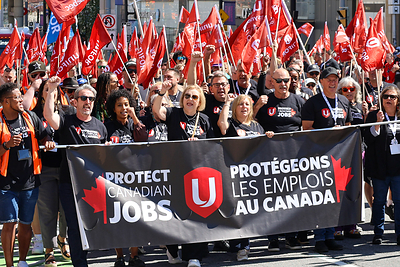
"At a time when we should be standing together as a country to fend off attacks from the Trump trade war, workers and their unions must now also defend the right to fair and free collective bargaining," said Unifor National President Lana Payne. "These proposed amendments to the Canada Labour Code give special authority to the Minister of Labour to override the ability of workers to exercise their right to strike."
Unifor bargains on behalf of some 70,000 workers in federally-regulated sectors, including marine, rail, aviation, media, telecommunications and road transport.
"Government needs to understand that there will be intended and unintended consequences from these proposed changes, on collective bargaining, on workers' ability to make positive changes in their workplaces and on how employers will now behave at bargaining tables," Payne said.
While Unifor commends the proposed changes to the code with respect to contract flipping in airports and improvements for workers to reach first collective agreements, the union takes issue with the proposal to give unilateral powers in section107 to the Minister of Labour to prevent or end a labour dispute by sending it to binding arbitration.
Also concerning is the national interest test outlined in the proposed code amendments and how this will impact the collective bargaining rights of workers.
"Whose interests are being protected here – those of corporations or workers? This process risks entrenching pre-emptive government intervention and creating a system where workers' rights can be stripped away based simply on where they work," said Unifor Quebec Director Daniel Cloutier.
The International Court of Justice in The Hague recently affirmed that the right to strike is a protected activity of trade unions under international law.
Unifor, and many Unifor local unions, responded to the first and second round of Employment and Social Development Canada consultations on the matter over the summer.
The Bill includes some important changes recommended by Unifor, including access to first collective agreement arbitration.
The legislation also addresses the problem of contract flipping in which a change of contractors that provide services at airports and other workplaces result in a loss of union bargaining rights and collective agreements. Workers will be able to retain their union representation and their collective agreements in the case of a contract changing hands, a longstanding demand of Unifor.
"Unifor members in airports especially have experienced the destabilizing effects of contract flipping, and it's far past time for this practice to end. This kind of protection is all the more important now, given the government's airport privatization plans," commented Payne.
Unifor will be closely reviewing Bill C-39 and will provide additional analysis in the coming days.
Unifor is Canada's largest union in the private sector, representing 320,000 workers in every major area of the economy including in members in federally regulated transport, road, rail, aviation, marine, telecommunications and media sectors.
The union advocates for all working people and their rights, fights for equality and social justice in Canada and abroad and strives to create progressive change for a better future.
SOURCE Unifor

